Before High SchoolSummer 2026
These books don't ease you in — they ask you to think harder, feel more precisely, and read between the lines. By the end of this list your child will walk into 9th grade already thinking like a literary analyst.
← All curated lists1
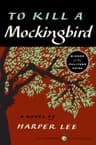
Some books teach plot. This one teaches conscience. Harper Lee's Maycomb, Alabama is a specific place in a specific time — and also everywhere, always. Atticus Finch does not win. He knows he will not win. He stands up anyway. That is the lesson.
conscience — an inner sense of right and wrong that guides a person's actions — the moral voice within that holds us accountable even when no one else is watching
“"Before I can live with other folks I've
got to live with myself. The one thing
that doesn't abide by majority rule is
a person's conscience."”
2
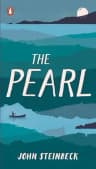
John Steinbeck wrote The Pearl in 1947, based on a Mexican folk tale he had encountered years earlier. A poor fisherman named Kino finds the greatest pearl in the world — and from that moment, everything he has is at risk. The novel is under a hundred pages and reads in a single sitting, but its moral weight is enormous. Steinbeck called it a parable, and he meant it. This is a story about what we wish for, what we are willing to do to keep it, and what we lose in the process. Students finish it quickly and spend days thinking about it. That combination is exactly what a great short novel should do.
Avarice — Extreme greed for wealth or material gain
“He was trapped as his people were always trapped, and would be until they could be sure that the things in the books were really in the books.”
3
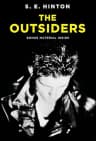
S.E. Hinton was sixteen years old when she began writing The Outsiders, and eighteen when it was published in 1967. She wrote it because she was frustrated that the books assigned in her school had nothing to do with the world she actually lived in — one divided between kids who had everything and kids who had nothing, and the violence that erupted between them. The novel follows Ponyboy Curtis, a Greaser on the wrong side of town, through a week that will change everything. It is one of the most widely read novels in American middle schools for a simple reason: students recognize it. The names and clothes have changed. The divisions have not.
Gallant — Brave, heroic, and noble — especially in the face of danger or difficulty
“He was gallant — that was the only word for it. A young man in a strange town, far from home, scared, but still managing to be kind.”
4
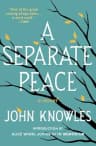
John Knowles published A Separate Peace in 1959, and it has never quite received the recognition it deserves — which is strange, because it is one of the most precise novels ever written about the inner life of a teenage boy. Set at a New England boarding school during World War II, it follows Gene Forrester and his best friend Phineas through a summer that ends in a moment Gene will spend the rest of his life trying to understand. The war is distant. The real conflict is interior — and far more dangerous. Students who read it tend to go very quiet afterward. That silence is the novel working.
Enmity — A state of deep-seated ill will and hostility between people
“Nothing endures, not a tree, not love, not even a death by violence. Changed, I headed back through the effects of the gale, thinking that this was the way it would be from now on.”
5
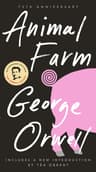
Written in 1945, Animal Farm is George Orwell's
deceptively simple allegory about revolution and
what happens after it. When the animals of Manor
Farm overthrow their human farmer, they dream of
equality and self-rule. What follows is a masterclass
in how power corrupts — and how language is its
most dangerous weapon.
allegory — a story where characters and events represent deeper truths about the real world — meaning that operates on two levels at once
“Orwell described his intent directly: "Animal Farm
was the first book in which I tried, with full
consciousness of what I was doing, to fuse political
purpose and artistic purpose into one whole."”